A Biofoundry is
an integrated research infrastructure that supports bio R&D by standardizing, automating, and accelerating the entire process of designing, building, and testing biological systems, including cells, proteins, and DNA.
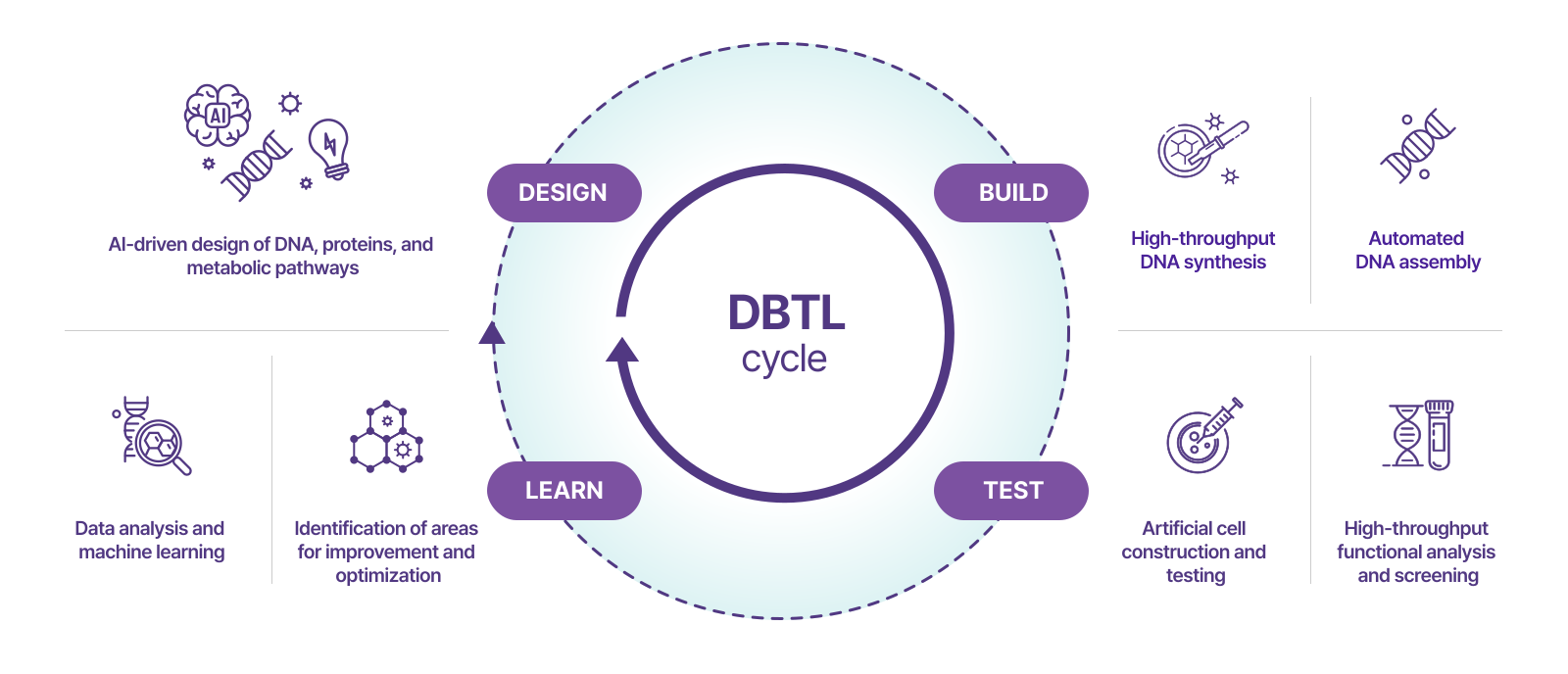
- Based on the Design-Build-Test-Learn (DBTL) cycle of synthetic biology, biofoundries serve as platform technologies that transform the speed and efficiency of biological research and development.
-
DBTL Infrastructure
By combining automated microscale liquid-handling technologies with massively parallel experimental systems, biofoundries automate the entire Design-Build-Test-Learn (DBTL) cycle and maximize research productivity.
-
AI-Powered Big Data Infrastructure
Experimental data are analyzed and learned from using AI to improve research accuracy and accelerate advances in the speed, scalability, and cost-effectiveness of synthetic biology technologies.
About Synthetic Biology
Synthetic biology is a field of science and technology that applies engineering principles to biology to design, build, and synthesize biological components and systems, including those inspired by existing organisms as well as those not found in nature.
 Biology
 Engineering
 Information Technology
 Synthetic Biology